The Japanese Language We Use Every Day. Among it, there are characters that have quietly disappeared, swallowed by the waves of history. These are “ゑ (we)” and “ゐ (wi).” It is said that these two hiragana hold deep meanings forgotten by modern people, as well as keys that unravel the truths of the universe. This article will comprehensively explore the truths of the lost characters, Katakamuna interpretations, and predictions for their future revival.
- 1. The Historical Intent and Background of the Loss of “ゑ” and “ゐ”
- Modernization during the Meiji Restoration and the National Language and Character Issue
- The Assimilation Phenomenon of Pronunciation and the Wave of Rationalization
- GHQ’s Educational Reform and Post-War National Language Policies
- The Hypothesis of Sealing the Spirituality and Word Spirit of the Japanese People
- 2. The Original Meaning and Role of “ゑ” and “ゐ”
- 3. Correct Pronunciation and Phonetics in Ancient Japan
- 4. Cosmic Perspective and Interpretation from Katakamuna Literature
- The 43rd Sound “ゑ” and Its Thought Energy
- 5. What If “ゑ” and “ゐ” Were Revived? Changes in Consciousness and Future Predictions
- 6. Practical Examples of Using “ゑ” and “ゐ”
- Conclusion: The New Dawn of Japan Woven by Lost Characters
1. The Historical Intent and Background of the Loss of “ゑ” and “ゐ”
The disappearance of characters is always intertwined with the social demands and political intentions of the time. Let’s first look at the historical background.
Modernization during the Meiji Restoration and the National Language and Character Issue
A significant turning point in Japanese history, where the forms and uses of characters dramatically changed, was the Meiji Restoration. In order to catch up with the Western powers, the government at the time pushed for rapid modernization and centralization. One challenge encountered in this process was the overly complex system of the Japanese language. This marked the beginning of the “national language and character issue,” leading some intellectuals to propose the abolition of kanji or the adoption of romaji. For a modern nation aiming for uniform education for all citizens and strengthening its military, the characters “ゑ” and “ゐ,” which were difficult to differentiate due to their similar pronunciations, became the primary targets for simplification. The national atmosphere prioritizing efficiency and practicality began to threaten the survival of these beautiful characters that had persisted since ancient times.
The Assimilation Phenomenon of Pronunciation and the Wave of Rationalization
From a linguistic perspective, looking back at history, by the end of the Heian period, the pronunciations of “ゑ” were already approaching “え,” and “ゐ” were approaching “い.” Confusion began to appear in literature during the Kamakura period, and by the Edo period, distinctions in pronunciation had become almost ambiguous within the culture of the common people. Furthermore, as the Meiji era progressed, the “genbun itchi movement,” which aimed to eliminate discrepancies between spoken and written language, became active. If there was no clear distinction in everyday conversation, the wave of rationalization suggested that the number of characters should be reduced to lower the learning costs for the public. The societal demand for practicality above all else pushed these two characters away from the historical stage.
GHQ’s Educational Reform and Post-War National Language Policies
The fate of these characters was determined by the “modern kana usage” officially announced by the Cabinet in 1946, shortly after the end of World War II. This policy led to the complete disappearance of “ゑ” and “ゐ” from public education. It is believed that the intentions of the GHQ, which indirectly governed Japan, strongly influenced this historical post-war reform. There is a possibility that they wanted to simplify the complex language system that obstructed literacy improvement in advancing Japan’s democratization. Regardless of the truth, it is an undeniable fact etched in history that the unprecedented chaos and value shifts following the defeat in war became a decisive moment that ended the lifespan of characters that had existed for thousands of years.
The Hypothesis of Sealing the Spirituality and Word Spirit of the Japanese People
As an interesting hypothesis from the hidden side of history, it is suggested that the intention was to intentionally seal the spirituality and the power of the word spirit possessed by the Japanese. Since ancient times, it has been believed that the words spoken carry the power of “kotodama,” which can influence reality. By excluding “ゑ” and “ゐ,” which possess unique high vibrations from daily life, it is theorized that there was an attempt to detach the consciousness of the Japanese people from the spiritual world and confine it within a materialistic framework. While academic proof is difficult, this hypothesis holds strong persuasive power and continues to attract many people in the modern spiritual community that values unseen energy.
2. The Original Meaning and Role of “ゑ” and “ゐ”
What original meanings did the two lost hiragana hold, and what roles did they play? Let us delve into the depths of Yamato words.
The Truth of the Gojuon Chart in Yamato Words
In ancient Japanese Yamato words, each sound carried independent deep meanings and energies. The Gojuon chart is said to represent not just a sequence of sounds but a mandala that illustrates the structure of the universe and the laws of nature. Within this, the “wa” row is positioned as an important group indicating overall harmony and the completion of processes. It begins with “わ (wa),” connects with others and the world through “を (wo),” and concludes with “ん (n).” The characters “ゐ” and “ゑ,” positioned in between, are believed to have meanings beyond mere symbols, serving as essential bridges that firmly connect the invisible spiritual world with the real world.
The Diffusive Energy of “ゑ (we)”
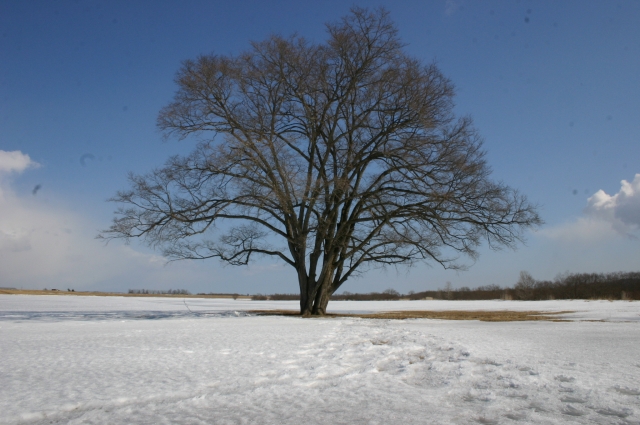
The sound “ゑ” contains an energy that connects to the roots of words such as “縁 (en)” and “笑み (emi),” symbolizing a rich outward expansion. It evokes the image of a great tree that firmly roots itself in the earth while extending its branches in all directions towards the sky. It carries a very positive and embracing nuance, inviting new things or fully receiving blessings from above. In contrast to the modern “え,” which has a linear and sharp direction, “ゑ” has a three-dimensional quality, radiating warmth that gently envelops the surrounding space and evokes a sense of infinite expansion.
The Certainty of Existence and Central Axis of “ゐ (wi)”
On the other hand, “ゐ” has a resonant quality that strongly affirms “existence” in the here and now, as represented by the word “居る (iru).” It symbolizes a quiet strength that maintains a stable central axis, deeply rooted in the earth. It also carries the meaning of an inexhaustible source of life, akin to a well (ゐど) from which pure water continuously flows. In contrast to the dynamic “ゑ,” “ゐ” possesses a static and deeply introspective energy. Together, these two characters can be interpreted as having allowed ancient Japanese people to perfectly maintain the balance of yin and yang.
Comparison Table of the Qualities of “ゑ” and “ゐ”
The characteristics of the two characters explained so far have been summarized in an easy-to-understand table. By visually comparing them, the differences in their roles become clearer.
| Feature | ゑ (we) | ゐ (wi) |
|---|---|---|
| Nature of Movement | Dynamic, Diffusive | Static, Introspective |
| Katakamuna Number | 43 (Reaching, Directionality) | 45 (Existence, Emergence) |
| Symbolic Image | Great tree, Smile, Connection | Well, Central Axis, Existence |
Thus, while possessing opposing qualities, it can be seen that they are in a complementary relationship. The two together create a complete harmony.
Exploring the Traces Quietly Remaining in Modern Society
Although they have disappeared from public view, traces of these characters still quietly remain in our daily lives. The most familiar and famous cases include historical brand names like “ヱビスビール” (Yebisu Beer) and “ニッカウヰスキー” (Nikka Whisky). Many people must have seen these on supermarket shelves. Additionally, by opening texts of classical Japanese literature or old waka, one can directly encounter beautiful primordial expressions such as “ゐなか (inaka)” and “ゑがく (egaku).” Even if they appear to have completely vanished on the surface, the DNA of these old hiragana continues to be passed down and lives on in the depths of Japanese culture, art, and commercial design.
3. Correct Pronunciation and Phonetics in Ancient Japan
With the loss of these characters, we have even forgotten the muscle movements needed to produce specific “sounds.” Let us unravel the correct pronunciations of the past.
The Rich Phonetic System Before the Heian Period
Let us turn our attention to the phonetics of ancient Japan. Until the early Heian period, Japanese people clearly distinguished between the “い・え” of the “あ行” and the “ゐ・ゑ” of the “わ行” in everyday conversation. Detailed examinations of literature and pronunciation guides from that time clearly record the differences in mouth movements and sounds. When transcribing the sounds of kanji brought from China into Japanese, strictly different characters were assigned. The spoken language of that era was more three-dimensional and rich than modern people might imagine, possessing a diverse range of sound variations. There are also phonetic approaches aimed at reviving the beautiful tones of that time.
The Sound Including Semi-Vowels of the “わ行”
The greatest feature of the pronunciation of the “わ行” is that it includes the semi-vowel “w,” where the lips are firmly rounded and protruded forward. In other words, the former “ゐ” was clearly pronounced as “wi” and “ゑ” as “we.” The mouth shape used when pronouncing foreign words like “whiskey” or “wedding” is exactly the same. Modern Japanese has increasingly flat sounds that can be pronounced with just the tip of the tongue, leading to a drastic reduction in dynamic movements using the lips and facial muscles. Reclaiming these lost pronunciations can be equated with enriching the use of facial expression muscles and restoring the original vitality and expressiveness of words from a physical level.
Reproducing Mouth Shapes from Phonetic Symbols
Using the International Phonetic Alphabet (IPA), “ゐ” is represented as [ɰi] or [wi], and “ゑ” as [ɰe] or [we]. The trick to pronouncing them correctly is to slightly pucker the lips and smoothly transition to the vowels while feeling the friction of the breath. While modern “い” and “え” have strong lateral movements, the ancient sounds were always accompanied by three-dimensional movements. This subtle use of space in the oral cavity fundamentally changed the resonance of the voice and is believed to have produced richer harmonics. Even simply vocalizing from the shape of “ウ” to “ウィ” and “ウェ” in front of a mirror should allow you to feel the distinct differences in sound.
4. Cosmic Perspective and Interpretation from Katakamuna Literature
Now, we will step into a deeper and more mysterious realm. From the perspective of the ancient characters known as “Katakamuna,” we will interpret the two characters.
The Ancient Characters of Katakamuna and Cosmic Physics
Let us consider this from the perspective of “Katakamuna,” which has garnered enthusiastic attention in spiritual circles. Katakamuna refers to the characters from an ancient civilization that supposedly existed in Japan tens of thousands of years ago, as well as the documents recording its wisdom. The geometric symbols composed of circles and lines are claimed by some researchers to depict truths that transcend mere characters, connecting to modern quantum mechanics and cosmic physics. While often dismissed as forgeries by the orthodox academic community, regardless of the authenticity of the data, the interpretations of the word spirits presented there hold the potential to resonate strongly with modern people and provide fundamental insights.
The 43rd Sound “ゑ” and Its Thought Energy
In the Katakamuna system, each character is assigned a unique energy and number (numerical spirit). “ゑ” corresponds to the 43rd sound and is interpreted as containing strong thoughts of “reaching” and “having a clear direction.” This sound symbolizes the manner in which energy transcends dimensions and reliably reaches its destination, as well as the process by which thoughts materialize in three dimensions. It is believed that the waveform of “ゑ” functions like an antenna, delivering one’s wishes to the heavens or sharply receiving inspiration from the universe. It is a powerful tool for expanding human consciousness.
The 45th Sound “ゐ” and Its Quantum Mechanical Existence
On the other hand, “ゐ” occupies the 45th sound and possesses extremely fundamental thoughts of “existence” and “new things being born.” This is very similar to the quantum mechanical phenomenon where material suddenly appears from a vacuum state. The sound of “ゐ” represents a state where our consciousness firmly exists “here and now,” directly connected to the roots of the universe. From the perspective of Katakamuna, it is interpreted that simply consciously vocalizing this sound can yield powerful centering effects on self-awareness and spatial purification. It serves as a key to entering deep meditative states, embodying a sacred vibration.
5. What If “ゑ” and “ゐ” Were Revived? Changes in Consciousness and Future Predictions
If these characters were to become standard in modern Japanese once again, what kind of impact would they have on society and our minds?
Healing Through Approaches to Brainwaves and Frequencies
If these characters were fully revived in modern Japanese, what changes would occur in our minds and bodies? One significant possibility is the deep relaxation effects brought about by changes in vocal frequencies. Pronunciations that involve rounding the lips and deep diaphragmatic breathing tend to favor the parasympathetic nervous system, making it easier for brainwaves to enter a relaxed alpha state. In the fast-paced, stress-filled modern society, the act of pronouncing words correctly may become a new form of mindfulness practice, leading to a novel shape of well-being.
Improved Resolution of Expression and Japanese Identity
If the differentiation between “え” and “ゑ,” as well as “い” and “ゐ,” became commonplace, the resolution of expression in writing and conversation would dramatically improve. One linguist stated:
“Reducing the framework of language means lowering the resolution of perceiving the world.”
Using modern characters for logical explanations and old characters for poetic descriptions would refine people’s sensibilities. As a love for unique culture develops, a new generation of Japanese people with strong identities is likely to increase.
Renaissance in Education, Art, and Digital Fields
In future societies, reintroducing these characters into educational settings is not a mere dream. Teaching hiragana as a “52-sound chart” rather than the traditional Gojuon chart would greatly contribute to improving children’s enunciation and rich emotional education. Additionally, in the fields of art and literature, creators are likely to begin using these characters as new expressive tools. With the evolution of digital technology, there may be features implemented in smartphones where AI reads context and automatically suggests “ゑ.” A renaissance of characters may emerge, heralding a new cultural movement sweeping from Japan to the world.
6. Practical Examples of Using “ゑ” and “ゐ”
Finally, here are some practical ideas that can be used immediately. Tips for leveraging the energy of these characters in daily life and business.
Utilizing in Business Names and Brand Names
When starting a business or launching a new brand, deliberately using old characters can be highly effective from a marketing perspective. It creates visually impactful logos that are easy to remember.
- Store Name: “和カフェ ゐごこち” (Emphasizing supreme comfort)
- Product Name: “特選銘菓 ゑにし” (A special gift that values connections)
- Service Name: “癒やしの空間 ゐぶき” (A place where you can feel the breath of life)
This kind of naming, which fuses tradition with novelty, can effectively differentiate from competitors.
Adding Accents to Everyday Communication
Incorporating these characters as a playful element in SNS posts or chats with friends is also recommended. Text-only communication can sometimes convey a cold impression. The unique roundness and visual dissonance of the old characters can soften the overall impression of the text.
- “いつもサポートありがとうござゐます” (Thank you for your support)
- “すてきなごゑんで繋がれましたね” (We connected through a wonderful bond)
- “今日も一日、ゑがおで楽しく過ごしましょう” (Let’s have a fun day with smiles)
Using them sparingly like a spice can convey warmth to the recipient while providing an intellectually unique impression.
Input Methods and Creative Activities on Digital Devices
Let’s organize how to input these characters on smartphones and computers.
- Romaji Input: Typing “wi” converts to “ゐ,” and typing “we” converts to “ゑ” instantly.
- Smartphone Flick Input: It is easy to operate the “わ” row key and select from the predictive conversion candidates.
Moreover, in creative activities like writing novels or manga, simply using “ゐる” instead of “ウィル” for wise men or “ゑむ・ゐざなう” for magical spells infuses Western-sounding names with Japanese mystique. This magical technique stirs readers’ imaginations and imbues characters with a spiritual aura.
Conclusion: The New Dawn of Japan Woven by Lost Characters
While “ゑ” and “ゐ” have disappeared from the historical stage, they have not perished. Their resonance quietly sleeps within our DNA and deep unconsciousness. We have comprehensively examined the background of their historical disappearance, the cosmic truths indicated by Katakamuna, and practical applications in modern times. Starting today, try incorporating these characters into your daily typing and vocalizations. The energy of the words you express will change, and eventually, the world you see will transform into something new and vibrant. The revival of these lost characters may herald the sound of a bell signaling a new dawn for Japan that values spirituality.